
What Is the Triffin Dilemma in Global Reserve Currencies? (Robert Triffin, Bretton Woods & US Hegemony)
A monetary and macroeconomic analysis of the Triffin Dilemma: the inherent conflict between short-term domestic economic objectives and long-term international liquidity demands faced by any sovereign issuer of the world’s primary global reserve currency.
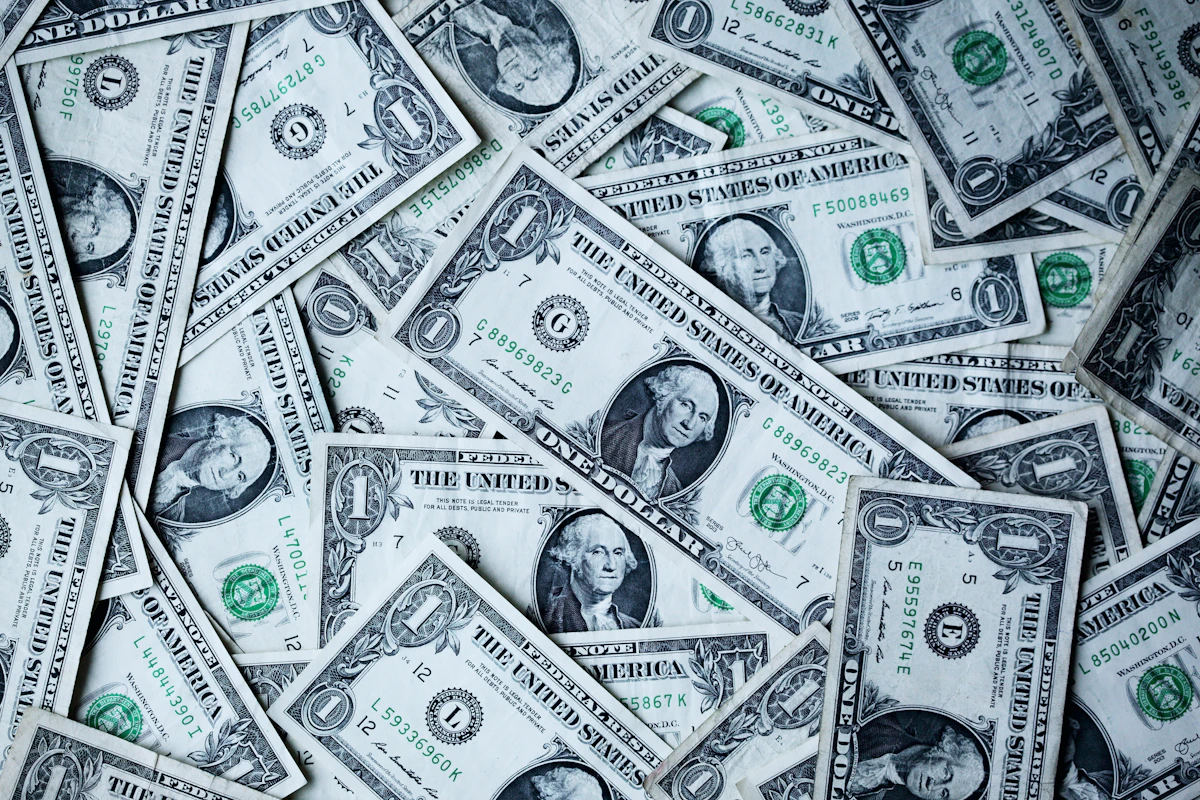


The Liquidity vs. Confidence Paradox
In 1960, Belgian-American economist Robert Triffin presented a devastating mathematical and structural critique to the United States Congress, published in his landmark book Gold and the Dollar Crisis [1,2]. Triffin identified a fundamental structural paradox at the heart of any international monetary system that relies on a single national currency (such as the U.S. dollar) as the primary global reserve asset [1,2].
The Triffin Dilemma states that the issuer of the global reserve currency faces two mutually incompatible imperatives [1,2,3]:
1. The Global Liquidity Imperative: As global trade and economic output expand, the rest of the world requires an ever-increasing supply of the reserve currency to settle international transactions, invoice commodities, and accumulate central bank foreign reserves [1,3]. To inject these dollars into global circulation, the reserve-issuing nation must perpetually run balance-of-payments (current account) deficits [1,3].
2. The Domestic Confidence Imperative: However, running persistent, compounding foreign deficits increases the total foreign-held liabilities of the reserve nation relative to its sovereign gold reserves or fiscal capacity [1,3]. Over time, mounting foreign debt inexorably erodes global market confidence in the long-term purchasing power and convertibility of the reserve currency, precipitating runs on the currency [1,2,3].
"To supply the world with liquidity, the reserve issuer must run permanent deficits; but running permanent deficits inevitably destroys confidence in the currency."
The Collapse of Bretton Woods (1971): Triffin’s Prophecy Fulfilled
Under the 1944 Bretton Woods Agreement, the U.S. dollar was pegged to physical gold at \$35 per ounce, and all other national currencies were pegged to the dollar [1,4].
Throughout the 1960s, U.S. spending on the Vietnam War and Great Society social programs flooded global markets with dollars [1,4]. By 1970, foreign central bank dollar claims exceeded \$40 billion, while total U.S. Treasury gold reserves had dwindled to \$11 billion [1,4,5].
When France (under Charles de Gaulle) and West Germany began sending naval vessels to New York to redeem dollar holdings for physical gold bullion, the run on U.S. reserves materialized exactly as Triffin had calculated [1,4,5]. On August 15, 1971, President Richard Nixon unilaterally closed the gold window ("The Nixon Shock"), dissolving the Bretton Woods fixed exchange rate system and forcing the world into unbacked fiat floating currencies [1,4,5].
The Modern Fiat Triffin Dilemma and "Exorbitant Privilege"
Even after the termination of gold convertibility, the U.S. dollar retained its status as the world’s dominant reserve currency—comprising over 58% of global allocated foreign exchange reserves, invoicing 50% of global trade, and dominating 88% of foreign exchange turnover [1,6].
French Finance Minister Valéry Giscard d’Estaing famously termed this the "Exorbitant Privilege": the U.S. can print paper currency at zero marginal cost to purchase real physical goods, factories, and commodities from foreign nations [1,6].
However, the modern fiat Triffin Dilemma extracts a severe domestic toll: perpetual foreign demand for U.S. dollar assets (especially U.S. Treasury bonds) keeps the dollar persistently overvalued, hollowing out domestic manufacturing employment, inflating persistent trade deficits, and generating structural debt expansion [1,3,6].
"The exorbitant privilege of printing the global reserve currency carries an exorbitant burden: an overvalued exchange rate that hollows out domestic manufacturing."
Alternatives: Keynes’s Bancor, SDRs, and Multipolar Reserve Architecture
At the original 1944 Bretton Woods conference, British economist John Maynard Keynes anticipated the Triffin dilemma and proposed a supranational currency called the Bancor, administered by an International Clearing Union [1,7]. Under Keynes’s plan, no individual sovereign nation’s domestic currency would serve as global money, and both trade-surplus and trade-deficit nations would face symmetric penalties for persistent imbalances [1,7].
While the U.S. rejected the Bancor in 1944, the IMF established Special Drawing Rights (SDRs) in 1969 as a supplementary basket reserve asset [1,7]. Today, discussions of a multipolar currency system—combining the Euro, Chinese Renminbi, regional swap lines (Chiang Mai), and decentralized settlement networks—represent ongoing attempts to escape Triffin’s structural trap [1,6,7].
Key Chronology & Milestones
Bretton Woods conference establishes $35/oz gold-pegged US dollar system; Keynes's Bancor rejected.
Robert Triffin presents the Triffin Dilemma to the US Joint Economic Committee.
IMF creates Special Drawing Rights (SDRs) as an international reserve asset.
Nixon Shock suspends dollar gold convertibility, ending Bretton Woods.
PBOC Governor Zhou Xiaochuan proposes replacing dollar reserve system with expanded SDR basket.
BRICS and regional trade blocs expand bilateral local currency settlement mechanisms.
Cited Primary & Academic Sources
7 Verified RecordsRobert Triffin (Yale University Press) · yalebooks.yale.edu
The foundational book formalizing the structural contradiction of single-nation global reserve currencies.
Robert Triffin (The American Economic Review) · jstor.org
Presentation of balance-of-payments statistics and the mathematical necessity of reserve asset expansion.
Barry Eichengreen (Oxford University Press) · oup.com
Definitive monetary history of dollar dominance, international liquidity provision, and domestic economic costs.
Robert Solomon (Harper & Row) · archive.org
Detailed account of the 1960s London Gold Pool, de Gaulle’s redemptions, and the Nixon Shock.
Milton Friedman & Anna Jacobson Schwartz (Princeton University Press) · press.princeton.edu
The classic treatise on monetary policy, gold flows, and fractional reserve banking dynamics.
Carol Bertaut, Bastian von Beschwitz, Stephanie Curcuru (Federal Reserve Board FEDS Notes) · federalreserve.gov
Federal Reserve empirical report on dollar invoicing shares, central bank reserves, and foreign debt liabilities.
Zhou Xiaochuan (Bank for International Settlements Review) · bis.org
Analysis by former PBOC Governor Zhou on Keynes’s Bancor and the structural flaws of sovereign reserve currencies.
Frequently Asked Inquiries
Click any inquiry to researchWhy can’t a country with a reserve currency balance its trade deficit?
If the reserve currency nation eliminates its trade deficit and achieves balanced trade, it stops exporting its currency to the world. Foreign nations will face an acute shortage of liquidity to conduct international trade and settle debts, causing a global deflationary crunch.
What was John Maynard Keynes’s proposed "Bancor"?
Keynes proposed an international, non-national currency called the Bancor used exclusively for central bank settlements. Under his plan, nations running persistent trade surpluses would pay negative interest penalties, forcing them to balance their trade rather than accumulating unspent foreign reserves.
How does the Triffin Dilemma harm the domestic economy of the reserve nation?
Continuous foreign demand for the reserve currency keeps the domestic exchange rate artificially high. This makes domestic manufactured exports expensive abroad and foreign imports cheap at home, accelerating deindustrialization and widening domestic wealth inequality.
Research delivered once a week.
One deeply investigated historical, scientific, or economic mystery grounded in primary sources. Pure evidence, zero noise.
Explore the Question Graph
Every investigation opens further avenues of historical and scientific inquiry. Select a connected question to research it immediately:
Related Research Investigations
Have a question of your own?
Alcuin researches primary historical records, academic journals, and peer-reviewed archives with zero hallucinations.